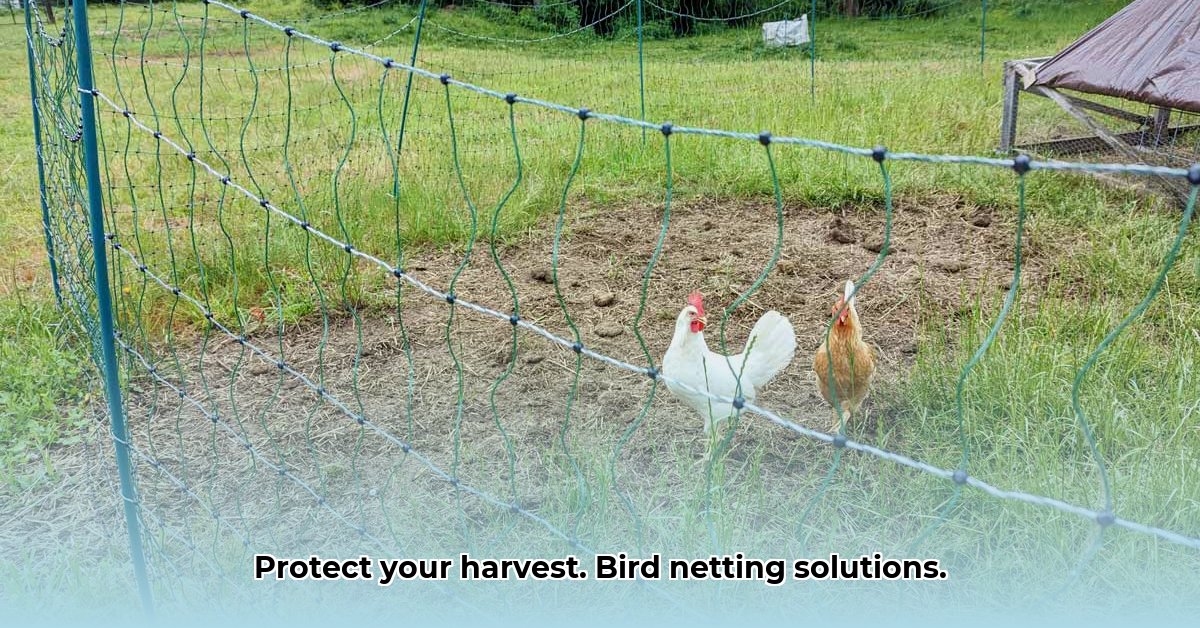
Protecting your crops from avian pests is crucial for a successful harvest. Tractor Supply offers a range of bird netting solutions, but choosing and using them effectively requires careful consideration. This guide provides actionable steps to protect your yield while minimizing your environmental footprint. For more information on fencing and gates to further protect your crops, check out Tractor Supply's fencing options.
Choosing the Right Netting: A Tailored Approach for Sustainable Agriculture
Tractor Supply provides various bird netting options. Your choice depends on several factors: the size of the birds you're targeting, the type of crop you're protecting, and your budget.
Mesh Size: Smaller mesh sizes (e.g., 1/2 inch) are ideal for smaller birds, while larger mesh sizes (e.g., 1 inch) are better suited for larger birds. Consider the specific birds plaguing your crops. A finer mesh will offer superior protection against smaller birds.
Material: Polyethylene is a common, affordable choice. However, consider biodegradable alternatives to minimize plastic waste. Tractor Supply may offer these more sustainable options. Look for UV-resistant netting for longer lifespan and reduced waste.
Netting Strength: Heavier-duty netting withstands stronger winds and determined birds. The local climate and prevailing weather conditions greatly influence this choice.
Tractor Supply Netting Options (Example):
| Netting Type | Mesh Size (inches) | Material | Strength | Ideal For |
|---|---|---|---|---|
| Lightweight Netting | 1/2 | Polyethylene | Low | Smaller birds, delicate crops |
| Medium-Duty Netting | 3/4 | Polyethylene | Medium | Most common birds, fruits, vegetables |
| Heavy-Duty Netting | 1 | Polyethylene | High | Larger birds, strong winds |
Installing Your Netting: A Step-by-Step Guide for Maximum Effectiveness
Correct installation is vital for bird exclusion. Follow these steps:
Precise Measurement: Carefully measure the area needing coverage, adding extra length and width for overlap and secure fastening.
Supportive Structure: Use poles, stakes, or existing structures (fences) to create a taut net. Ensure adequate support.
Secure Fastening: Employ clips, ties, or weights to firmly anchor the netting, eliminating gaps birds could exploit.
Overlapping Sections: Overlap edges by at least one foot to create a robust barrier, preventing bird entry.
Regular Inspection: Periodically check for tears, holes, or weak spots; repair or replace damaged sections immediately.
Maintenance and Disposal: Environmental Responsibility
Regular Maintenance: Inspect the netting frequently for damage and repair or replace damaged sections promptly. Maintaining the integrity of the netting ensures its effectiveness.
Responsible Disposal: Dispose of old netting responsibly. If not biodegradable, explore recycling options; if not recyclable, dispose of it according to local regulations. Consider biodegradable options to reduce plastic waste.
Troubleshooting Common Bird Netting Challenges
Birds Still Penetrating?: Check for holes, loose areas, or inadequate support. Consider a smaller mesh size or more robust netting.
Weather Damage: Strong winds or heavy rain can compromise netting. Use heavier-duty netting or strengthen your support system.
Entanglement of Beneficial Wildlife: Minimize impact on beneficial wildlife by using netting strategically; regularly check and adjust as needed.
Cost-Benefit Analysis: Protecting Your Investment and Long-Term Savings
While bird netting incurs an initial cost, it often results in significant long-term savings by preventing crop losses. Compare the cost of netting to potential crop losses to assess its economic viability. Consider other pest control methods like scare tactics or companion planting to supplement your netting strategy. A simple cost-benefit analysis can highlight the significant returns from preventing crop damage.
Sustainable Solutions: Balancing Crop Protection and Environmental Stewardship
Choosing biodegradable or reusable netting is a key step towards sustainable agriculture. Explore environmentally friendly pest control methods alongside netting to reduce reliance on single-use materials. Future research into innovative, more sustainable netting materials offers exciting possibilities for environmentally conscious farmers.
Environmental Considerations and Regulations Compliance
Always prioritize minimizing environmental impact. Choose durable nets to reduce frequent replacements. Dispose of old nets properly and consult your local agricultural extension office for any relevant regulations concerning bird netting usage and disposal. Be aware of potential impacts on non-target species and take steps to mitigate them.
Key Takeaways:
- Selecting appropriate netting material (mesh size, strength, biodegradability) is essential.
- Proper installation and maintenance are paramount for effective bird control.
- A thorough cost-benefit analysis ensures long-term economic viability.
- Exploring sustainable alternatives and responsible disposal practices demonstrates a commitment to responsible farming. Tractor Supply's options provide a pathway to effective and environmentally conscious crop protection.
This guide aims to help you leverage Tractor Supply's bird netting offerings for optimal crop protection while fostering sustainable agricultural practices.